Monday, October 29, 2012

Final Work - 'The Dream'


To download: http://www.4shared.com/music/kK_DQdGs/Emerging_project_-_Dream.html?

Exegesis

Emerging Practices – The Dream

The dream is a soundtrack of a story of a man who runs his normal daily life while suddenly a bad situation appears but then he realises it was just a dream.
The idea was to create a short movie but without any film, so I am left with just using sound to tell the story. I am interested in filmmaking and know that sound is a very important aspect in film, but sound design is not my forte. So this project was the perfect chance to develop my skills in sound design. This was also my reason in choosing to create a filmless film.

The process of recording sounds on your own is new to me. As previously I have only used pre-recorded sounds in making films. Sound editing and composing was also new to me, but I do some film editing the timeline is not new to me.
I enjoyed the practice of recording, editing and composing a soundtrack, and gained new skills along the way.

The whole process has led me looking at sound design in a whole new way.  Sound is one important aspect often overlooked in different areas of production. Try turning of the sound while watching television. You will be particularly bored. Sound is very important as it creates mood and atmosphere which then creates emersion, without sound you will not be as excited, emotional and other emotions towards the particular media.
For this reason I see my project (The Dream) as an extension of another media such as a book or comic.  


The Importance of Sound Design


Turn the sound off, and try watch an episode of any show. You will be extremely bored. Sound is important in anime as it creates mood and atmosphere, and without it you will not be as emotional, excited or affected in any way towards the show

This website shows how the basic example of the sound design process and how it really creates a difference
http://www.martinoflynn.com/blog/2010/03/18/the-importance-of-sound-design/

Sunday, October 28, 2012

High Tech High Students Learn Art Of Storytelling With Sound


Seniors at High Tech High tell engaging stories using only sounds. Led by teacher and sound artist Margaret Noble, we find out what the students have to say about the experience.

http://www.kpbs.org/news/2012/mar/02/students-learn-art-storytelling-sound/

Foley in Film

A short video showing foley artists at work!
They are so skilled that they are doing it live

Interactive book

An interactive book for the ipad, it would be cool if it used sound as another aspect to make the interactive book more immersive.


Monday, October 15, 2012

Audiobooks


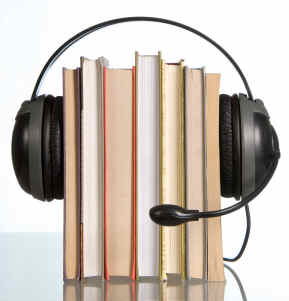
One of the great benefits of being able to record sound is to make books available for listening. With the advent of audio recordings, many people were able to hear literary classics read aloud, and to experience them for the first time.
Audio books are, of course, books read aloud and recorded to be listened to on some kind of player. As sound technology has changed, audio books have changed, as well. No longer are they available only on volumes consisting of 14 or 15 vinyl LPs. Now, books are available on audio cassette or CD.
Talking books are books created for the use of the visually impaired. They are produced in a variety of formats, and some need a special player to be used. Many visually impaired people are able to receive players free, and these machines enable them to play their talking books independently, without the help of a sighted person. CD technology has revolutionized the talking book industry, since data can be compressed to fit much more information on a single disc. Many talking book players will also play music CDs, so the visually impaired person has a multi-use machine.

Sound in Film


When you stand in the stereo showroom, or when you move your speakers around the family room, how do you know when the sound sounds right? When THX creator Tomlinson Holman designs crossover circuitry or specifies speaker type and placement, how does he know when he has it right? Discussing the home THX system, Holman stresses the importance of making films sound in the home just as they do on the dubbing stage or in the theater.

As sound technology becomes increasingly microminiaturized--moving first from theater to home and now to multimedia computer workstation- -it is tempting to speculate about future developments. Will CD-ROM- equipped computers need center speakers if they are to be used for talking books or voice-illustrated encyclopedias? Will they have built- in subwoofers next year, so as to provide the bass response needed for certain styles of music? Will they feature FM connections to surround speakers, so that video games will feel truly wrap-around? We live in exciting times, which only become more fascinating when we apply to them the logic systematically applied to past developments in sound: in order to succeed, each new sound technology must satisfy the needs created by the other sound practices to which potential consumers are accustomed.  


http://en.wikipedia.org/wiki/Sound_film